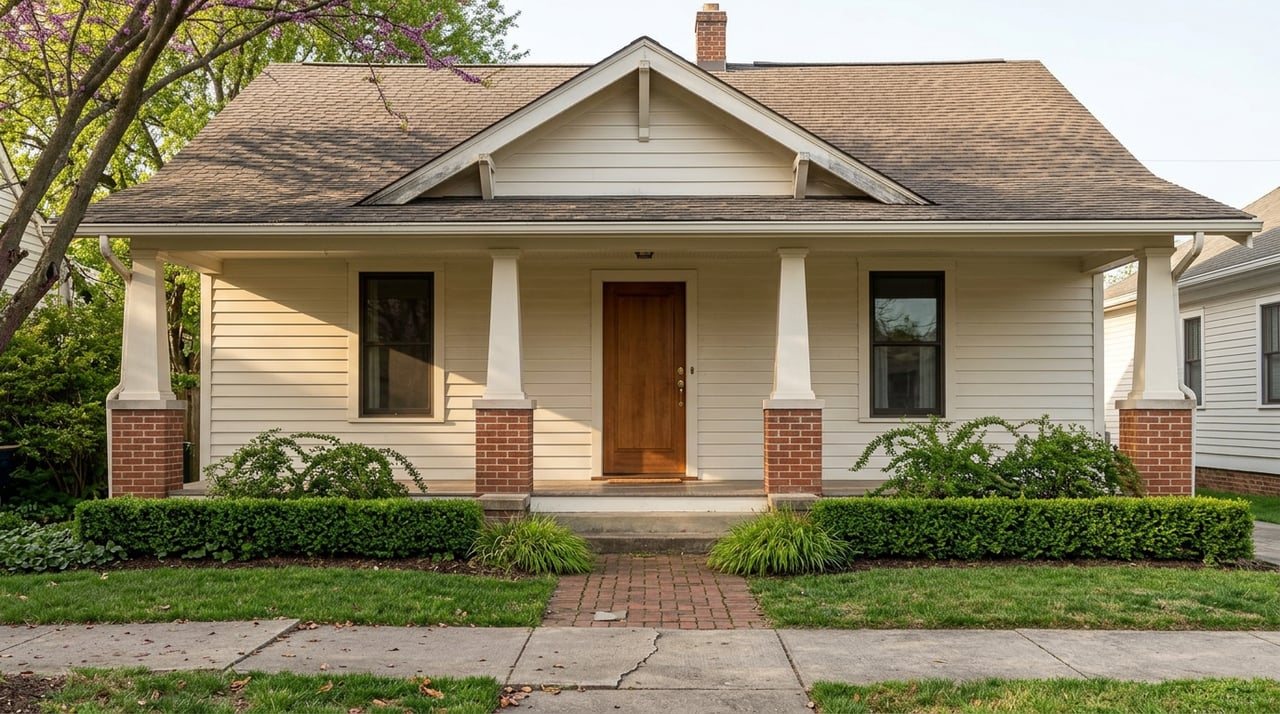
A buyer and seller sit down at the closing table for a bungalow in Sylvan Park. The settlement statement includes a line for prorated property taxes, a credit calculated to the day, splitting the year's tax bill between the seller's months of ownership and the buyer's. It looks precise. It has a dollar figure carried out to the penny. Everyone in the room treats it as settled fact.
It is often an estimate built on last year's bill, and in Davidson County right now, last year's bill may not be a reliable stand-in for what actually comes due.
That gap did not exist a few years ago. It exists now because of what happened in 2025, and it matters to anyone closing on a home in West Nashville today, not just the people who filed appeals when the notices first arrived.
The Assumption That Broke In 2025
Every four years, the Davidson County Assessor of Property conducts a mass reappraisal of every parcel in the county, resetting assessed values to reflect market conditions. The 2025 cycle, based on 2024 market activity and effective January 1, 2025, produced a median value increase of 45 percent countywide. That single number made headlines, but it hides the real texture: the Assessor's office released a district-by-district heat map showing the increase ranged from 38 percent in the county's lowest-growth district to 54 percent in its highest.
West Nashville has spent the past several years as one of the region's fastest-appreciating corridors, with renovation and infill activity concentrated in Sylvan Park, The Nations, and Charlotte Park. A neighborhood that outpaced the county median during that window is, almost by definition, sitting closer to the 54 percent end of that range than the 38 percent end. That is the first thing worth knowing before assuming last year's tax bill tells you much about this year's.
Two Separate Levers, Rarely Explained Together
Property value and property tax rate are set by two different bodies, and conflating them is where most of the confusion at closing tables originates. The Assessor's office determines value. The Mayor and Metro Council set the rate. State law requires that after a reappraisal, the county calculate a revenue-neutral certified rate, a lower rate designed to prevent the county from collecting a windfall simply because values rose. For the Urban Services District, that revenue-neutral rate came out to $2.222 per $100 of assessed value. For the General Services District, it was $1.995.
The Mayor and Metro Council then had the option to keep those revenue-neutral rates or vote to raise them. They voted to raise them, to $2.814 for the Urban Services District and $2.782 for the General Services District, adopted in June 2025. In percentage terms, that is 26 percent above revenue-neutral for the Urban Services District and 39 percent above revenue-neutral for the General Services District.
Assessor Vivian Wilhoite has been explicit about separating these two decisions publicly:
"A higher tax bill is not driven solely by an increase in property value. The tax rate set by the Mayor and Metro Council plays a significant role, and in some cases, a substantial one."
Here is the number that actually matters to a West Nashville seller trying to explain a tax bill to a buyer: the rate that took effect in 2025, at $2.814 for the Urban Services District, is lower than the rate that existed before the reappraisal, which was $3.254. So the rate itself went down in nominal terms. For a home whose value rose by roughly the county median of 45 percent, the net effect on the actual dollar tax bill works out to an increase in the neighborhood of 25 percent, not 45 percent, because the lower rate offsets a meaningful share of the value jump. That is a very different number than the one most people fixate on, and it is worth having ready in a listing conversation.
The Davidson County Assessor's Office says a successful appeal only ever touches the value side of that equation. The rate is not appealable. A seller who won a reduction earlier this year did nothing to the 26 to 39 percent gap between revenue-neutral and adopted rates. Both levers moved independently, and only one of them bends to an owner's argument.
Why The Timing Of The Bill Is The Real Friction
Davidson County bills property taxes in arrears. The bill covering a given calendar year is mailed in October and due the following year. A closing that happens anytime between January and September references whatever the most recent mailed bill says, because the current year's bill simply does not exist yet.
That convention worked fine when values and rates barely moved year over year. It broke down for anyone who closed on a West Nashville property in the first three quarters of 2025, before the October 2025 bill, the first to reflect both the new reappraised value and the new adopted rate, had even been printed. Closings during that window were prorating off a bill built on the old $3.254 rate and pre-reappraisal values, understating what the buyer would actually owe once the real 2025 bill arrived.
As of today, closings reference the October 2025 bill, which does reflect the full post-reappraisal picture. That should make this year's prorations more reliable than last year's. But two things can still move between now and the October 2026 bill: an individual property's assessed value, if the owner filed and won an appeal earlier this year, and the countywide rate itself, which the Mayor and Metro Council reset annually as part of the budget process typically approved by June 30.
The Assessor's office allows property owners to appeal their value every year, not only in reappraisal years. For the 2026 assessment year, the informal review window closed April 17, 2026, and formal appeal scheduling with the independent Metropolitan Board of Equalization ran from May 26 through June 26, 2026, according to Grove Hopper's Davidson County guide. If a West Nashville seller went through that process this spring, the value on file could shift before the next bill is issued, which means the number a title company plugs into a proration worksheet today may not match what actually gets billed in October.
What To Verify Before You Sign
Before treating a tax proration figure as settled, both sides of a West Nashville transaction are better served checking a few specific things rather than accepting the number a title company defaults to.
- Confirm which bill the proration is based on. If it predates October 2025, it reflects pre-reappraisal values and the old $3.254 or $2.922 rate, not current reality.
- Ask whether the seller filed an appeal this year. The informal review and formal MBOE windows for 2026 have already closed, but a decision reached during that window could change the assessed value reflected on the next bill.
- Remember that rate and value move independently. A stable or reduced assessed value does not guarantee a stable tax bill if the Council adjusts the rate again during its next budget cycle.
- Ask your closing agent whether the settlement statement includes a reproration clause. Not every closing includes one, and it is worth requesting.
None of this changes what a home in Sylvan Park or The Nations is worth on the open market. It changes whether the number both parties are trusting on the settlement statement reflects the county's actual math or an inherited assumption from a bill that no longer describes the property. In a normal year, that distinction barely matters. This year, with the largest reappraisal in recent memory layered under a rate decision made independently of it, it is worth five extra minutes before anyone signs.
If you are preparing to list or purchase in West Nashville and want a second set of eyes on how the current reappraisal cycle actually applies to a specific property, Stutts Miller Properties can walk through the numbers with you before they show up on a closing statement. Request a private consultation to start that conversation.
This article is general information, not legal, tax or financial advice. Consult a qualified professional about your situation.