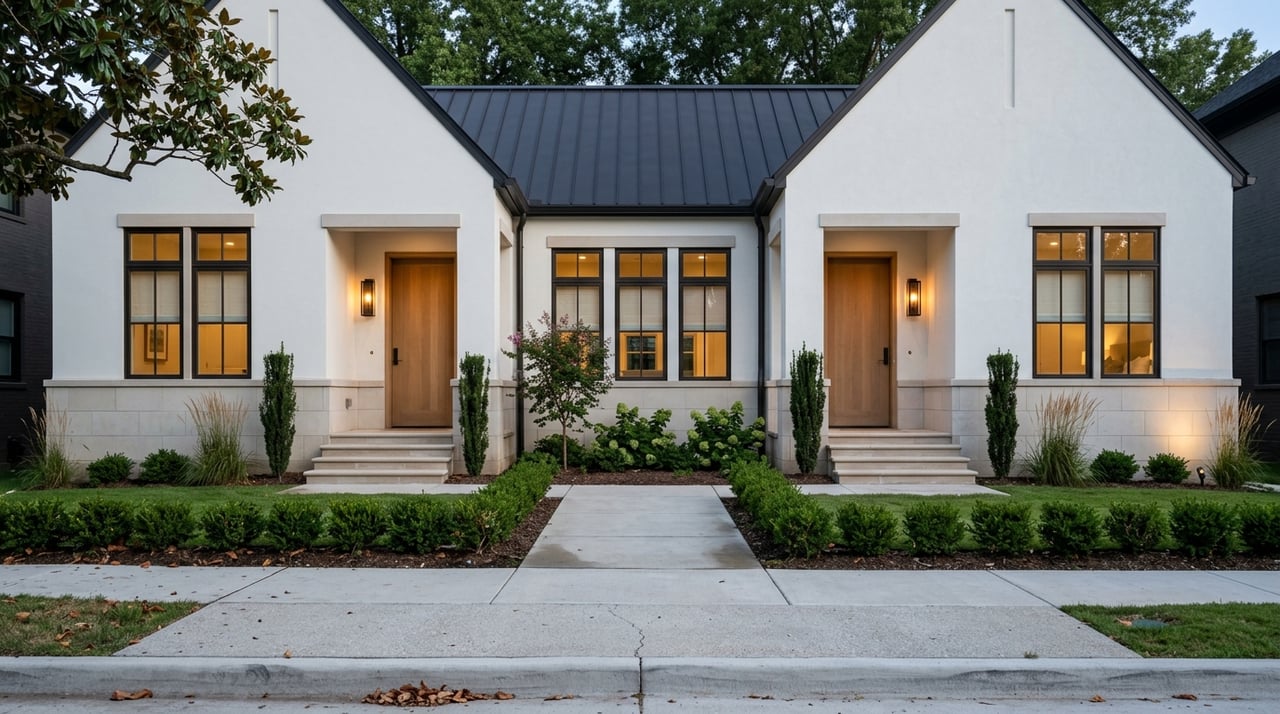
If you are considering East Nashville investment properties, the biggest question is not whether demand exists. It is whether the numbers, zoning, and property-level risks line up with your plan. In a neighborhood area with wide price ranges and different operating rules from one address to the next, a smart purchase starts with careful underwriting. Let’s dive in.
East Nashville prices vary more than many buyers expect
East Nashville is not one uniform market. Late April 2026 Zillow data shows neighborhood values ranging from $316,675 in Napier Area to $853,961 in Lockeland Springs, with other pockets landing across a wide middle band.
That spread matters if you are comparing a value-add purchase to a more turnkey home in a premium pocket. Zillow also shows ZIP-level values at $372,730 in 37207, $456,037 in 37208, $503,352 in 37216, and $617,764 in 37206, which reinforces how much location can affect your entry point.
For many buyers, the practical underwriting bands look like this:
- Low-$300Ks to low-$400Ks for smaller parcels or value-add opportunities
- Mid-$400Ks to mid-$600Ks for core East Nashville product
- $700Ks to $800Ks+ for premium pockets such as East End and Lockeland Springs
Redfin adds an important market-timing layer. In March 2026, East Nashville’s median sale price was $560,000, down 1.2% year over year, and homes sold after a median of 89 days on market.
That does not suggest a frozen market. It suggests a market where pricing strategy, condition, and location still drive outcomes, and where investors have time to evaluate options instead of rushing into a weak fit.
Rental potential is solid, but strategy matters
For a conventional long-term hold, East Nashville rent levels compare favorably with the broader Nashville market. Zillow’s March 2026 rental data shows average rents of $2,070 in 37206, $1,912 in 37207, and $1,903 in 37216.
Those figures sit at or above Nashville’s metro average rent of $1,787 for April 2026. That gives long-term investors a useful starting point when estimating income potential, especially in areas with stable demand and fewer operating complications.
In many cases, a long-term rental is the lower-friction path. You still need to evaluate taxes, insurance, maintenance, and property condition, but you avoid some of the extra compliance and operational burdens that come with a furnished or short-term setup.
Furnished and short-term rentals require tighter underwriting
A furnished rental or short-term strategy can look attractive on paper, especially given Davidson County tourism demand. Visit Nashville reports $11.2 billion in visitor spending in 2024, and 2025 hotel performance data shows 67.0% occupancy with an average daily rate of $199.20.
That supports the idea that transient demand exists. Still, demand alone is not enough to justify a purchase.
In Davidson County, operating costs and compliance can materially change your returns. Metro’s short-term rental tax summary shows a 6% occupancy tax plus a $2.50 additional occupancy tax, and permit holders must also remit business, sales, and hotel occupancy taxes.
That means your gross nightly revenue is not your true income. Before you buy, you need to net down for taxes, permit costs, insurance, management, cleaning, vacancy, and the real effort required to keep operations compliant.
STR zoning rules can make or break the deal
This is where many East Nashville investment conversations need a reality check. Nashville’s current short-term rental law, BL2020-187, took effect July 10, 2020, and the rules are highly specific.
Under the current framework, owner-occupied short-term rental permits are allowed as accessory uses in zoning districts that allow residential use, excluding NS districts. Not-owner-occupied permits are only allowed with conditions in certain mixed-use, commercial, and downtown districts.
The key issue for many investors is straightforward: new not-owner-occupied permits are not permitted in AR2A, R, RS, or RM zones. Since many East Nashville properties sit in residential zoning categories, that can eliminate the strategy before you ever get to income projections.
This is why parcel-level verification matters more than broad neighborhood assumptions. A property that seems ideal for a short-term rental may not qualify at all.
Permit details add more operational limits
Even when a property is eligible, Nashville’s permit process includes several practical constraints. Metro states that short-term rental permits are limited to four sleeping rooms, valid for 365 days, cost $313 to renew, and are non-transferable.
That last point is especially important for buyers. A permit can be cancelled when ownership changes, so you cannot assume a current operator’s status carries over after closing.
Metro also requires proof of residency or entity linkage, a floor plan, proof of insurance with $1 million in liability coverage, tax compliance, and adjacent-property notification. Operating without a permit can lead to citations and a one-year waiting period before reapplying.
For that reason, Metro directs applicants to use the Short Term Rental Permit Eligibility Viewer before buying or applying. In practical terms, that means address-specific due diligence should happen early, not after you have committed earnest money based on an unverified plan.
Flood risk is not a minor detail
In East Nashville, flood risk deserves serious attention. Metro states that all streams within Metro Nashville are subject to flooding, and properties within or near a Special Flood Hazard Area face the highest risk.
Just as important, being outside the SFHA does not guarantee safety. East Nashville planning materials also note that the area’s green network consists mainly of floodways, which adds another reason to review drainage, elevation, and insurance needs before you move forward.
For an investor, flood risk affects more than peace of mind. It can shape insurance costs, renovation choices, future resale flexibility, and how comfortably a property fits your risk tolerance.
Historic overlays can slow renovations
Some East Nashville properties come with another layer of review. Metro explains that historic zoning is a design-review overlay, which does not change the property’s base use but does add review requirements.
East Nashville-related historic overlays listed by Metro include Edgefield, Eastwood, and Lockeland Springs-East End. If your investment plan depends on major exterior changes, additions, or infill work, those review steps can affect timeline and cost.
That does not make these properties poor investments. It simply means your renovation plan should match the actual review environment instead of relying on a generic construction timeline.
Neighborhood operations still affect returns
A good investment model should account for day-to-day operations, not just acquisition price and rent. Metro accepts complaints related to illegal short-term rentals and nuisance issues such as noise, parking, and trash.
That matters because guest management and neighbor relations are part of the business model. If a property only works when everything goes perfectly, it may not be underwritten conservatively enough.
You should also remember that HOA rules can be stricter than Metro regulations. A property can seem compliant at the city level and still face limitations from a homeowners association.
What strategy usually makes the most sense?
For many buyers, the lowest-friction approach in East Nashville is a well-located long-term hold. Rents in key ZIP codes are competitive with or above the metro average, and the operating model is usually simpler than a short-term setup.
A furnished or short-term strategy may still work, but only where the exact parcel clearly qualifies and the projected income can absorb taxes, permits, insurance, and management overhead. In other words, higher upside only counts if the address, zoning, and operations support it.
A disciplined acquisition process should include:
- Confirming the exact zoning on the property
- Checking short-term rental eligibility on the address
- Reviewing flood status and drainage conditions
- Verifying whether a historic overlay applies
- Checking for HOA restrictions
- Confirming how permit transfer rules affect your plan
- Comparing projected rents to your full cost structure
In a market as varied as East Nashville, details matter. The right property can be a strong long-term asset, but the wrong assumptions can turn a promising deal into a difficult one.
If you want a discreet, data-driven second opinion on an East Nashville acquisition, Stutts Miller Properties offers private consultation and buyer representation designed to help you evaluate opportunities with clarity and care.
FAQs
What do East Nashville home values look like in 2026?
- Late April 2026 Zillow data shows East Nashville values ranging from $316,675 in Napier Area to $853,961 in Lockeland Springs, with ZIP-level values from $372,730 in 37207 to $617,764 in 37206.
What are average rents for East Nashville investment properties?
- Zillow’s March 2026 rental data shows average rents of $2,070 in 37206, $1,912 in 37207, and $1,903 in 37216, which are generally at or above Nashville’s metro average rent of $1,787 in April 2026.
Can you buy a non-owner-occupied short-term rental in East Nashville?
- Not always. Under Nashville’s current rules, new not-owner-occupied short-term rental permits are not permitted in AR2A, R, RS, or RM zones, so you need to verify the exact parcel before buying.
What short-term rental costs should East Nashville investors budget for?
- In addition to normal operating costs, Metro shows a 6% occupancy tax plus a $2.50 additional occupancy tax, and permit holders must also remit business, sales, and hotel occupancy taxes.
Why does flood risk matter for East Nashville rentals?
- Metro states that all streams within Metro Nashville are subject to flooding, and properties within or near a Special Flood Hazard Area face the highest risk, though being outside that area does not guarantee safety.
Do historic overlays affect East Nashville investment properties?
- Yes. Metro says historic zoning is a design-review overlay that adds review requirements, and East Nashville-related overlays include Edgefield, Eastwood, and Lockeland Springs-East End.
What is the safest investment approach in East Nashville?
- Based on the market and regulatory factors in the research, a well-located long-term hold is often the lowest-friction strategy, while a furnished or short-term plan requires stricter parcel-level and financial review.